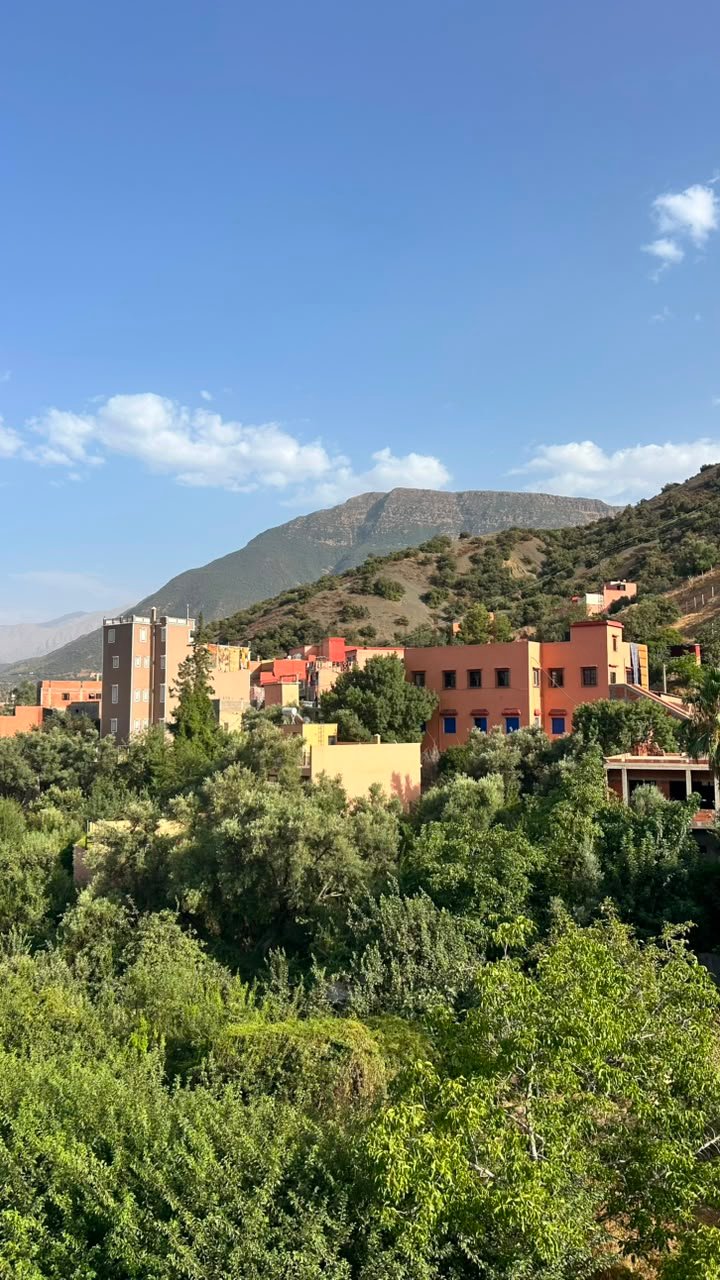
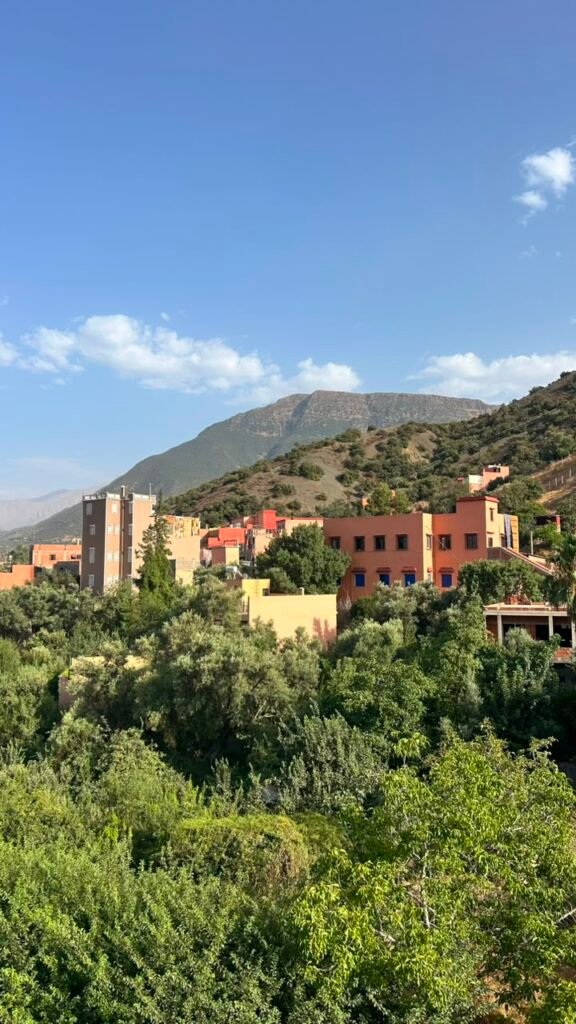
The best time to visit Ourika Valley is from March to May, when snowmelt fills the Setti Fatma waterfalls and daytime temperatures sit between 18 and 26°C. October and November come a close second, with mild weather and fewer visitors. Summer is popular for escaping the Marrakech heat, but weekends are crowded and afternoon storms can make the river dangerous.
The valley sits between 1,000 and 1,500 m of altitude, so it is usually 6 to 8°C cooler than Marrakech. That difference shapes every season, and it is why we plan our tours around it.
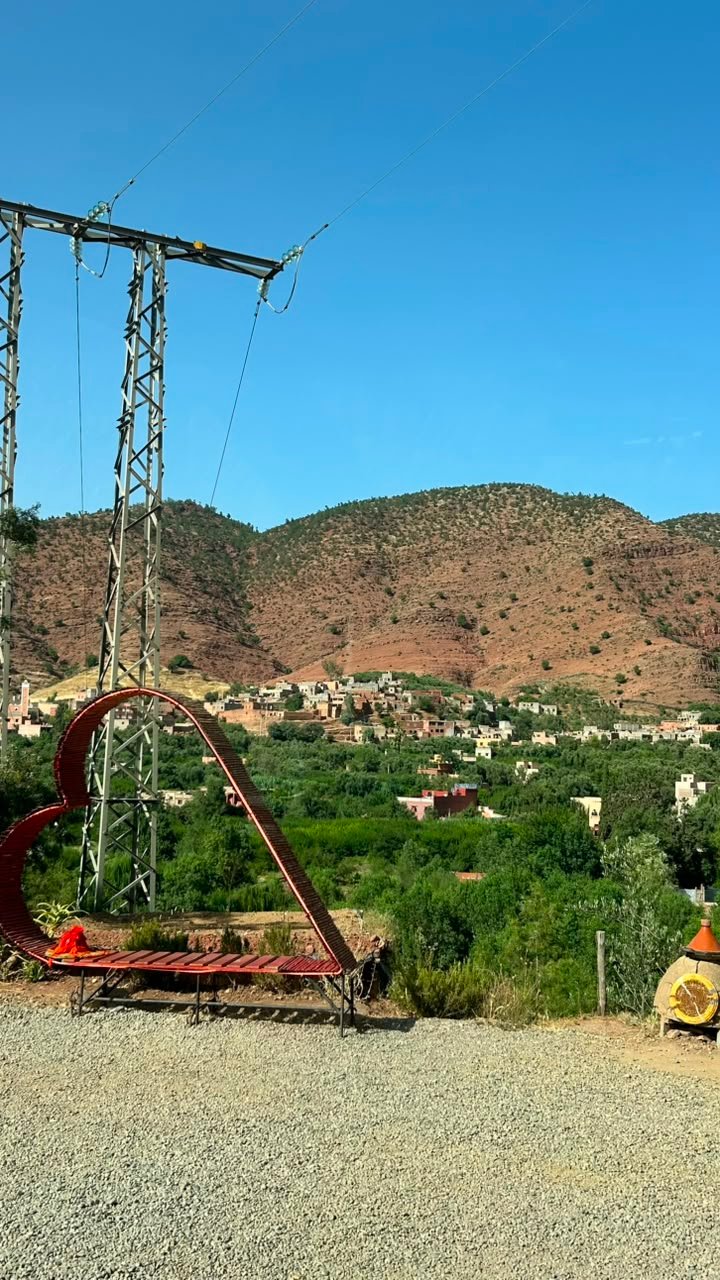
Ourika Valley Weather Month by Month
The table below shows typical daytime highs in Setti Fatma, how the waterfalls look and how busy the valley gets. Numbers are averages, so pack for a few degrees either way.
| Month | Daytime high in Setti Fatma | Waterfalls | Crowds | Our rating |
|---|---|---|---|---|
| January | 10 to 14°C | Medium, snow on peaks | Low | Good for quiet visits |
| February | 12 to 16°C | Medium to strong | Low | Good |
| March | 15 to 19°C | Strong | Medium | Excellent |
| April | 18 to 22°C | Very strong | Medium to high at Easter | Excellent |
| May | 22 to 26°C | Strong | Medium | Excellent |
| June | 26 to 30°C | Medium | High on weekends | Good on weekdays |
| July | 29 to 33°C | Low | Very high | Go early, avoid weekends |
| August | 29 to 33°C | Low, storm risk | Very high | Go early, watch the sky |
| September | 25 to 29°C | Low to medium | Medium | Good |
| October | 20 to 24°C | Medium after first rains | Medium | Excellent |
| November | 15 to 19°C | Medium | Low | Very good |
| December | 11 to 15°C | Medium | Medium at New Year | Good, dress warm |
Spring (March to May): Full Waterfalls and Green Terraces
Spring is when the valley looks its best. Snow on the High Atlas melts and feeds the Ourika river, so the seven Setti Fatma waterfalls are at full power. Walnut and almond trees are in leaf and the barley terraces are bright green.
April is the busiest spring month because of European school holidays. Book a few days ahead, especially for private tours around Easter.
Summer (June to August): Cool Escape With Two Warnings
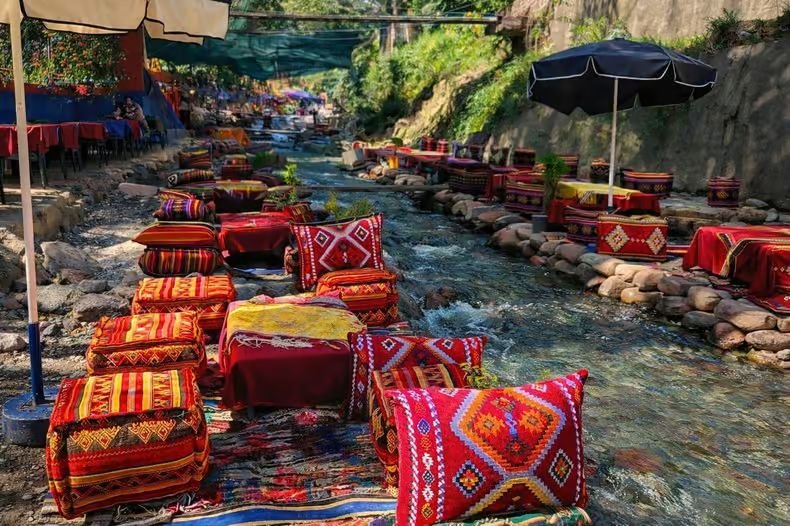
When Marrakech hits 40°C, the riverside cafés of Setti Fatma feel like air conditioning. Locals know it, so Saturdays and Sundays fill up fast from late morning.
The first warning is crowds. Start before 10:00 or choose a weekday. The second is weather. Short, violent storms can build over the mountains in the afternoon, and the river can rise within minutes. The valley suffered a deadly flash flood in August 1995, and guides still take this seriously.
In August, the village also hosts the Moussem of Setti Fatma, a religious and festive gathering that brings large crowds and traffic.
Autumn (September to November): Our Favorite Season
Autumn has warm days, cool mornings and far fewer visitors than spring. After the first rains in October, the waterfalls pick up again and the walnut trees start to turn yellow.
It is also the best time for the evening tour with Berber dinner by the river. Sunset comes early and the light on the red hills is soft.
Winter (December to February): Snow Views and Empty Trails
Winter days are often sunny and clear, with snow on the peaks above Setti Fatma. Mornings and evenings are cold, close to 0°C in the upper valley, so bring a warm layer.
The trail can be wet and slippery near the falls. Your guide may suggest the easier riverside walk instead. From Aghbalou, a side road climbs to the Oukaïmeden ski station at about 2,600 m, which opens when there is enough snow.
Best Time of Day to Visit
Timing during the day matters as much as the season. These are the windows we use for our own groups.
- Arrive at Setti Fatma between 10:00 and 11:00 to hike before the midday rush.
- Have lunch by the river around 13:00 to 14:00, when the tables are in the shade.
- Head back by 16:00 in summer to avoid the storm window and the traffic.
- For golden light and cooler air, choose an evening visit leaving Marrakech at 16:30.
Ramadan and Public Holidays
During Ramadan, which falls around February and March in 2027, most riverside restaurants stay open for tourists, but the rhythm of the valley is quieter during the day. Evenings come alive after sunset.
Moroccan holidays like Eid and the summer school break bring many local families. Weekdays outside these dates are always calmer.
Plan Your Visit at the Right Time With Our Team
There is no bad month to visit the Ourika Valley, only better hours and better plans. Our drivers adjust pickup times to the season, and our guides read the weather before every hike.
Book the Ourika and Setti Fatma day trip from 13.07€, or choose a private tour to set your own timing. Before you go, read our Setti Fatma waterfalls hike guide and our tips on getting from Marrakech to Ourika Valley.
Frequently Asked Questions
What is the best month to visit Ourika Valley?
April is the best month, with full waterfalls, green terraces and temperatures around 18 to 22°C. March, May and October are also excellent choices.
Is Ourika Valley worth visiting in winter?
Yes, winter brings clear skies, snow views and quiet trails. Days are mild, but mornings are cold, so bring a warm jacket.
Is Ourika Valley too hot in summer?
No, it is usually 6 to 8°C cooler than Marrakech, so it is a good escape from the heat. Arrive early and avoid weekends to skip the crowds.
Are the Setti Fatma waterfalls dry in summer?
They rarely dry up completely, but flow is low in July and August. For the strongest falls, visit between March and May.
Is it dangerous to visit Ourika Valley when it rains?
Heavy rain and summer storms can cause sudden river rises, so it can be risky near the water. Follow your guide’s advice and stay away from the riverbed if storms build.